
5 Ways AI is Revolutionizing Web Development and What It Means for Your Business
- Home
- Tech Talks
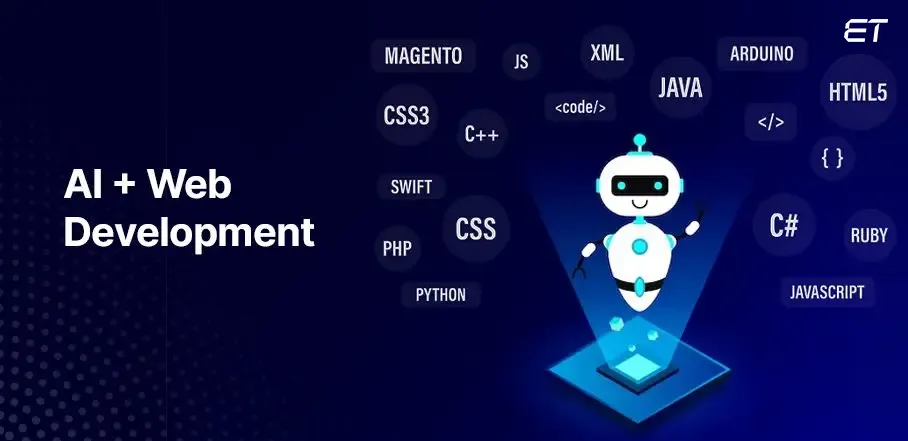
In the fast-evolving digital landscape of 2026, a website is no longer just a static digital storefront. It has become a living, breathing ecosystem that learns, adapts, and evolves. At the heart of this transformation is Artificial Intelligence (AI), which has transitioned from a backend novelty into the very foundation of modern web development.
For business owners, this isn’t just a technical shift—it’s a competitive one. The gap between businesses using AI-powered web solutions and those relying on legacy systems is widening. Understanding how AI is reshaping the web is essential for anyone looking to increase efficiency, reduce costs, and deliver a superior customer experience.
Here are the 5 primary ways AI is revolutionizing web development in 2026 and what it means for your business’s bottom line.
1. Hyper-Personalization: The End of "One-Size-Fits-All"
Traditional websites deliver the same experience to every visitor. In 2026, AI has made this approach obsolete. Modern web development now utilizes Real-Time Personalization Engines that adjust the website’s content, layout, and calls-to-action (CTAs) based on who is browsing.
How it Works
AI analyzes hundreds of data points in milliseconds—including past behavior, geographic location, referral source, and even current browsing intent. If a user has frequently viewed “SEO services,” the homepage dynamically rearranges itself to highlight SEO case studies and specific service packages.
What it Means for Your Business
- Higher Conversion Rates: By showing users exactly what they are looking for, you remove friction from the buyer’s journey.
- Increased Dwell Time: Personalized content keeps users engaged longer, signaling to search engines that your site is high-quality.
- Improved Loyalty: Customers are more likely to return to a platform that “understands” their preferences.
2. AI-Driven Design and Prototyping
The days of waiting weeks for a high-fidelity mockup are over. AI tools like Uizard, Framer AI, and Adobe Firefly have compressed the design-to-development pipeline from months to days.
The Shift to Collaborative AI
Web developers in 2026 use AI as a “Creative Partner.” Instead of building every grid from scratch, designers use natural language prompts to generate responsive layouts that adhere to modern UI/UX principles.
What it Means for Your Business
- Rapid Deployment: You can launch landing pages or new features 70% faster than traditional methods.
- Reduced Design Costs: Automating repetitive tasks (like resizing images or adjusting breakpoints for mobile) allows your team to focus on high-level strategy rather than manual labor.
- A/B Testing at Scale: AI can generate dozens of design variations simultaneously to test which layout performs best with your specific audience.
3. Intelligent Search and Generative UI
The search bar is undergoing its biggest change since the invention of the internet. We have moved from “Keyword Search” to “Semantic Discovery.”
The Rise of Generative UI
Instead of just showing a list of links, modern websites use AI to generate custom interfaces in response to a query. If a user asks a complex question in your search bar, the AI might generate a custom comparison table or a unique visual guide on the fly to answer them.
What it Means for Your Business
- Zero-Click Satisfaction: By providing direct answers within your site, you become the primary authority for the user.
- Voice Search Readiness: As users move toward conversational queries, AI-integrated sites are better at understanding and responding to natural language.
- Reduced Support Burden: Advanced AI can handle complex “How-to” queries that used to require a human support ticket.
4. Automated SEO and Content Optimization
In 2026, SEO is no longer about “guessing” what Google wants. AI tools now perform real-time audits and updates to ensure your site remains at the top of the AI Overviews and traditional search rankings.
Generative Engine Optimization (GEO)
A new discipline called GEO focuses on making your website content “citeworthy” for AI assistants like Gemini and ChatGPT. AI-driven development tools automatically structure your data (Schema Markup) and optimize your content hierarchy to ensure AI models recommend your brand.
What it Means for Your Business
- Automated Metadata: AI can generate unique, SEO-optimized meta descriptions and alt-text for thousands of products instantly.
- Content Gap Analysis: Predictive AI identifies what topics your competitors are ranking for and suggests specific content to help you outrank them.
- Compliance Monitoring: AI automatically checks for accessibility (WCAG) and privacy (GDPR) compliance, reducing legal risks.
5. Predictive Maintenance and Self-Healing Code
Websites are more complex than ever, but AI has made them more resilient. “Self-healing” codebases can now detect and fix bugs before a human even notices them.
Real-Time Anomaly Detection
AI monitors your website 24/7 for unusual patterns—be it a sudden spike in 404 errors, a security breach attempt, or a slow-loading script. Systems like Snyk and Applitools use machine learning to verify that your site looks and functions perfectly across every device.
What it Means for Your Business
- Maximum Uptime: Issues are resolved automatically, ensuring you never lose a sale due to a technical glitch.
- Advanced Cybersecurity: AI recognizes “Zero-Day” threats and bot attacks by analyzing behavioral patterns, keeping your customer data safe.
- Long-Term Scalability: As your traffic grows, AI-driven serverless architectures automatically adjust resources to handle the load without manual intervention.
Conclusion: The Future belongs to the "AI-First" Business
The revolution of AI in web development is not about replacing human creativity; it’s about amplifying it. In 2026, the most successful businesses are those that treat their website as an intelligent asset—one that uses AI to listen, learn, and act on behalf of the user.
By adopting AI-driven design, personalization, and automated SEO, you aren’t just building a website; you’re building a scalable growth engine. At Ikreo, we stay at the forefront of these technologies to ensure your digital presence isn’t just modern—it’s future-proof.